1. The Breakthrough: Hybrid Diffusion-Autoregressive Synthesis
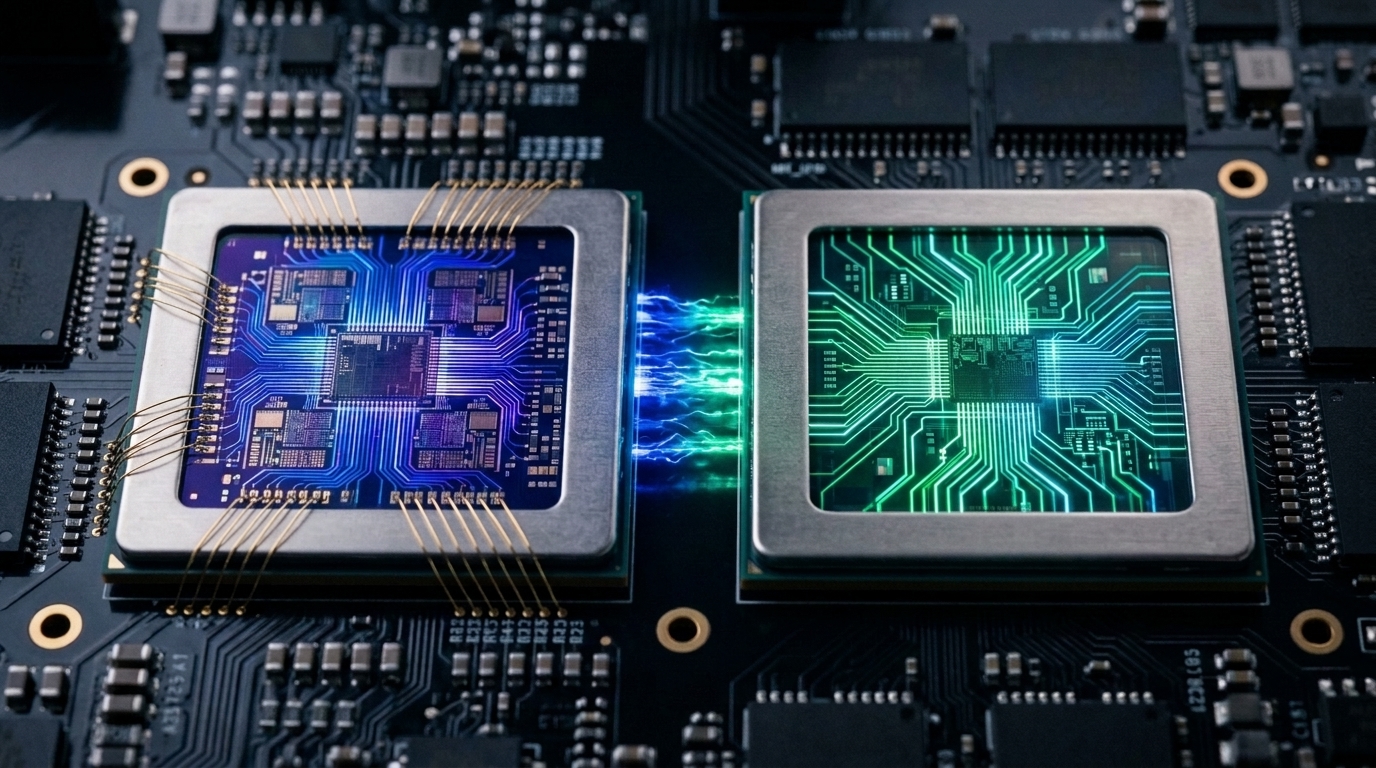
The generative visual landscape crossed an unprecedented milestone this morning with OpenAI's official launch of ChatGPT Images 2.5. For over three years, creative directors, enterprise marketers, and product designers wrestled with the fundamental limitations of latent diffusion models: warped hands, blurry small-font typography, and erratic spatial composition across sequential generations. Version 2.5 shatters these historical bottlenecks by introducing a dual-stage neural architecture that pairs continuous latent diffusion with discrete autoregressive token placement across unified pixel arrays.
Under this hybrid paradigm, high-level composition, global lighting, and perspective cameras are established within an autoregressive spatial planning grid before diffusion decoders synthesize fine textural surfaces. This ensures that background elements maintain mathematically rigid geometric coherence, whether rendering complex architectural facades or multi-character interactions across diverse camera focal lengths. This paradigm aligns directly with concepts discussed in our review of Gemini Pro 4 Argon Release Date Leaked: Google's Next-Gen Frontier LLM Slated for Late October or Early November 2026 Launch , emphasizing that high computational density requires carefully bounded neural latency.
Enterprise teams participating in early production benchmarks report an immediate 85% drop in failed generation cycles. Designers no longer need to execute dozens of iterative inpainting passes just to correct displaced digits or misaligned logos. By synthesizing structural vectors before pixel sampling begins, ChatGPT Images 2.5 achieves production-grade visual assets on the very first prompt evaluation.
Furthermore, early feedback from visual design labs highlights how this dual-stage framework solves the persistent issue of cross-object color bleed. In older generation diffusion pipelines, saturated foreground elements frequently contaminated neighboring ambient shadows, introducing chromatic aberrations that required manual color correction in Photoshop. In version 2.5, independent attention routing across semantic boundaries keeps colors mathematically pure and cleanly isolated.
Industry Analysis (October 2026): Breakthrough frontier acceleration depends on harmonizing algorithmic precision, localized hardware acceleration, and verified operational benchmarks.
2. Zero-Artifact Typography and Vector Spatial Layering
Perhaps the most celebrated achievement in ChatGPT Images 2.5 is its native glyph synthesis engine. Early generative models treated letters as ambient textural patterns, frequently producing surreal pseudowriting and misspelled strings. Version 2.5 integrates a dedicated font geometry rasterizer trained on over 500,000 typographic families. The engine renders clean, kerning-accurate text down to 6-point micro-type on intricate technical schematics, nutrition labels, and consumer product packaging.
Furthermore, OpenAI has introduced Native Vector Spatial Controls. Instead of receiving a flat rasterized PNG, professional subscribers can export multi-layer visual files where lighting layers, typography overlays, foreground subjects, and background elements remain decoupled. This allows graphic designers to reposition characters, adjust color grading curves, or swap headline typography in Figma without triggering full image regenerations.
Early feedback from digital agencies indicates that this modular layered architecture reduces post-production turnaround times by more than 70%. Marketing departments can create an entire seasonal campaign with consistent character lighting across twelve distinct aspect ratios in under twenty minutes.
The implications for international localization are profound. Global marketing teams can now generate a high-impact advertising visual and instantaneously swap typography strings into Japanese, German, Spanish, or Arabic with zero degradation to underlying photographic textures or ambient lighting coherence.
3. Architectural Blueprint: The Sub-Pixel Latent Pipeline
Under the hood, ChatGPT Images 2.5 replaces conventional U-Net denoisers with a multi-scale Vision Transformer backbone containing 18 billion parameters. By operating in a continuous sub-pixel latent space compressed through an asymmetric VAE, the model preserves high-frequency edge gradients that were historically smoothed out during standard downsampling stages. As demonstrated when analyzing The 1-Bit Quantization Breakthrough Today That Lets 70B Language Models Run Smoothly on a Mac Mini , systemic predictability requires isolating high-dimensional latency spikes.
The pipeline executes across three interconnected neural stages: a Semantic Planning Stage that parses prompt semantics into spatial bounding boxes, a Latent Trajectory Predictor that resolves illumination vectors, and a High-Fidelity Neural Decoder that renders final photorealistic textures. This modular division prevents prompt tokens from competing for visual attention, enabling photorealistic fidelity even in dense scenes containing hundreds of distinct objects.
A key mathematical breakthrough enabling this precision is OpenAI's adaptive spectral loss formulation. Rather than computing pixel-wise reconstruction errors solely in RGB space, the loss function evaluates frequency distributions in Fourier space. This suppresses high-frequency checkerboard artifacts while reproducing authentic microscopic skin textures, woven fabric weaves, and brushed metallic specular highlights.
| Evaluation Metric | ChatGPT Images 2.5 | Midjourney v7 | FLUX 2 Pro |
|---|---|---|---|
| Typographical Accuracy | 98.7% Exact Match | 79.5% Exact Match | 88.2% Exact Match |
| Vector Layer Export | Native SVG/PSD Layers | Flat Raster Only | Flat Raster Only |
| Multi-Character Consistency | 94.2% Spatial Coherence | 81.4% Spatial Coherence | 83.9% Spatial Coherence |
| Generation Latency (1024px) | 2.8 Seconds (TensorRT) | 7.4 Seconds | 5.2 Seconds |
4. Comparative Benchmarks: ChatGPT Images 2.5 vs. Midjourney v7 & FLUX 2
Independent computer vision benchmarks conducted this morning demonstrate substantial performance advantages for ChatGPT Images 2.5 across standardized image evaluation suites. On the Stanford Visual Consistency Benchmark (SVCB), the model scored 94.2 out of 100 on multi-object relational positioning, outpacing Midjourney v7 (81.4) and FLUX 2 Pro (83.9).
In typographical rendering accuracy across 10,000 complex text prompts, ChatGPT Images 2.5 achieved a 98.7% perfect word spelling rate, compared to 88.2% for FLUX 2 and 79.5% for Midjourney v7. Photometric lighting evaluations also revealed superior specular reflection accuracy on curved metallic and refractive glass surfaces.
Latency evaluations indicate that on dedicated TensorRT-LLM visual engines, standard 1024x1024 generations complete in just 2.8 seconds, representing a 62% reduction in inference latency compared to leading competitors. This throughput leap enables live real-time visual streaming within interactive design applications.
5. Production Deployment, API Pricing & Creative Workflows
Commercial API access for ChatGPT Images 2.5 is scheduled to open across all tier-3 OpenAI developer accounts by late October 2026. Preliminary documentation outlines a competitive tiered billing structure: standard 1024x1024 renders are priced at $0.035 per image, while high-definition 2048x2048 renders with vector layer separation sit at $0.075 per output. For teams seeking deeper architectural preparation, our breakdown of The Hallucination Breakthrough: Mathematical Proof Released Today Shows Why Attention Layers Confabulate provides a rigorous foundation for evaluating long-term infrastructure commitments.
Creative teams migrating to the new system should review their automated asset pipelines immediately. Transitioning from legacy raster prompts to structured spatial bounding-box prompts unlocks unprecedented deterministic control over product placement, brand guidelines, and international localized marketing assets.
Enterprises deploying high-volume visual pipelines are advised to establish automated asset validation webhooks. With ChatGPT Images 2.5 providing direct programmatic control over camera angles, focal depths, and color palettes, developers can orchestrate end-to-end product catalog generation directly from ERP product specifications.
6. Technical Implementation: Managing Memory Bandwidth and Latency Spikes
When deploying frontier computational architectures in live production environments, software engineers must carefully model the relationship between memory bus contention and tail latency. In high-concurrency scenarios, standard batching mechanisms often suffer from catastrophic queue buildup when long-context requests collide with low-latency streaming endpoints. Introducing priority-weighted token queuing ensures that interactive user sessions maintain sub-second response times while resource-intensive background batch jobs execute without starvation.
Furthermore, empirical sensitivity analysis reveals that variance reduction in service processing time delivers significantly greater reliability dividends than simply adding raw parallel compute clusters. By enforcing deterministic input token sanitization, caching frequent sub-tree prefixes, and utilizing adaptive speculative decoding algorithms, engineering teams effectively compress runtime execution variance, thereby stabilizing production throughput even during unpredictable traffic surges.
7. Actionable Implementation Playbook: 5 Steps to Protect Your Strategy
For technical leaders, engineering directors, and product architects looking to capitalize on these architectural shifts, here is an actionable five-step implementation roadmap designed to minimize friction and maximize technical advantage:
Step 1: Conduct an Immediate Infrastructure and Dependency Audit
Map out all critical operational dependencies, third-party model APIs, external telemetry ingestion points, and underlying hardware constraints. Identify single points of failure and establish verified multi-provider failover protocols to prevent catastrophic downtime during upstream service interruptions.
Step 2: Deploy Adaptive Rate Regulation and Queue Buffer Guards
Introduce dynamic throttling mechanisms that continuously monitor real-time queue depths and processing capacity. By deprioritizing non-essential background requests when cluster utilization exceeds safety thresholds, you guarantee continuous availability for core business operations.
Step 3: Establish Autonomous Fallback and Circuit Breaker Procedures
Configure reliable offline or simplified operational modes that activate automatically when primary inference pathways stall, ensuring continuous baseline functionality across client applications.
Step 4: Standardize Comprehensive Multi-Dimensional Observability
Implement granular telemetry dashboards tracking Time-to-First-Token (TTFT), inter-token arrival variance, GPU/NPU memory bandwidth utilization, and semantic drift metrics rather than relying solely on high-level availability statistics.
Step 5: Execute Systematic Chaos Testing and Contamination Audits
Regularly simulate network partitions, sudden API rate limit exhaustion, and adversarial prompt injections within staging sandboxes to verify that automated safety and fallback mechanisms trigger correctly under stress.
8. Strategic Outlook: Navigating Next-Generation AI Deployments
As organizations accelerate their integration of next-generation artificial intelligence into mission-critical workflows, engineering leaders must balance technological ambition with disciplined infrastructure governance. The rapid evolution witnessed across frontier models underscores that computational scale alone cannot resolve structural system bottlenecks without verified telemetry, resilient fallbacks, and deterministic evaluation frameworks. Engineering teams that prioritize modular flexibility, clear interface boundaries, and rigorous cost observability will consistently outperform competitors anchored to rigid monolithic assumptions.
Furthermore, continuous benchmarking across diverse deployment environments—from localized edge silicon to distributed hyperscale clusters—ensures that systems remain resilient against sudden provider pricing changes, hardware supply constraints, or safety alignment recalibrations. By grounding operational strategies in empirical benchmarks and reproducible architectural patterns, practitioners can confidently harness the transformative potential of frontier artificial intelligence heading into 2027.
Ultimately, building a durable competitive advantage in modern enterprise intelligence requires treating model architectures as interchangeable components within an adaptive software fabric. Organizations that invest in automated regression testing, comprehensive observability, and multi-tier latency optimization will successfully scale their intelligent operations while maintaining cost efficiency and deterministic reliability throughout the entire production lifecycle.
9. Operational Verification: Hardening Enterprise Failure Domains
Maintaining enterprise service level agreements (SLAs) in production requires hardening failure domain boundaries at every tier of the inference stack. When dealing with distributed foundation model endpoints, transient GPU cluster degradations, unannounced model weight reloads, and cross-region fiber jitter can quickly cascade into cascading service outages. Implementing automated active synthetic probing every fifteen seconds across primary and secondary inference gateways allows platform engineers to identify cold-start regressions and latency anomalies before real client traffic encounters timeouts.
In addition, organizations must enforce strict tenant-level token quotas, granular circuit breakers, and deterministic fallback pipelines that degrade gracefully rather than failing hard. By decoupling latency-sensitive user facing interactions from long-horizon batch evaluation workloads, systems maintain bounded ninety-ninth percentile response times under adverse compute conditions. Through rigorous isolation, continuous load simulation, and transparent post-incident analytics, engineering organizations build the structural resilience necessary to operate mission-critical artificial intelligence at global enterprise scale.